
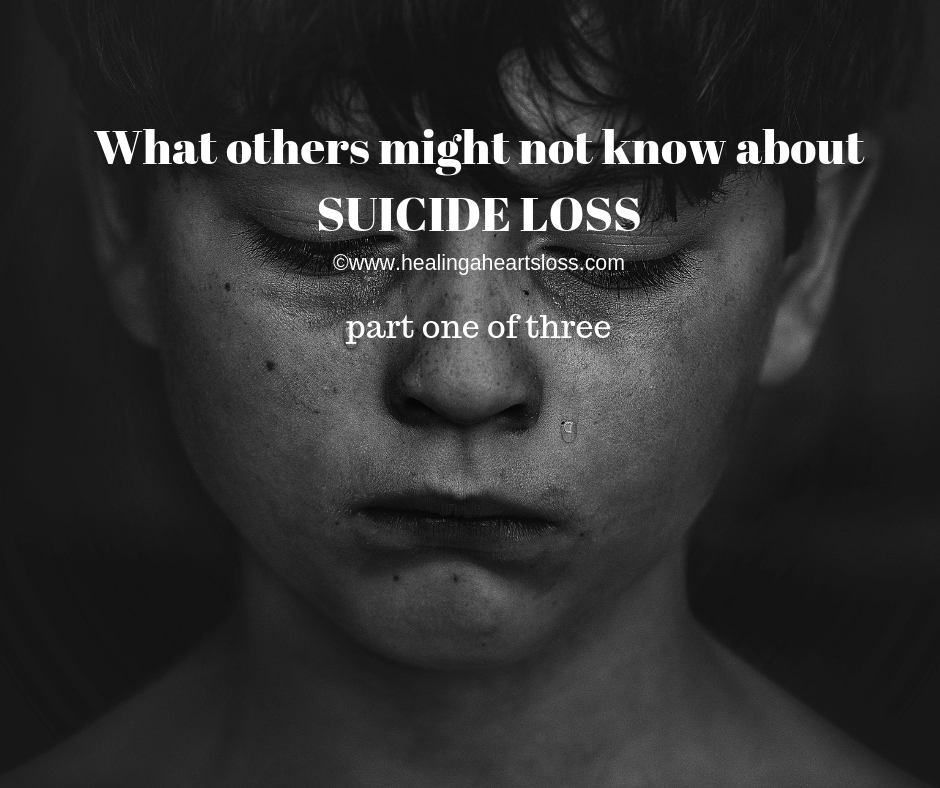
Below are some points of what others might not know about SUICIDE LOSS and the experiences that someone has when a suicide death happens to a person they care about. Not only care about, but perhaps they have found the deceased person after they died by suicide.
- This is a SUDDEN and TRAUMATIC loss experience with the potential to create Complicated Grief scenarios and Post Traumatic Stress.
- There is a change in what and how you believe your world “should” be; your assumptive world view changes. For some, suicide loss was something that happened to other people, not you or someone close to you.
- There may be guilt, shame and blame for not preventing the death. In some cases, people know the potential for suicide death is there, but do not know when, how etc. In other cases, you may have no idea this was coming; therefore, how could you have prevented it? This does not stop the questions of WHY.
- This suicide loss experience is NOT something someone ever “gets over”. Seriously, I will never tell someone the day will come when they stop thinking and feeling the effects of this loss experience.
- Sad as it is for the surviving family or friends of a suicide victim, there are occasions when they are the victims of harassment and blamed for the death of the suicided person.
- Hmmm, what about the fact the surviving person who has been banished from family or extended family now that their special person is deceased?
For those who gradually see someone seem “better” after a suicide loss in their life, you need to know THEY ARE NOT BETTER! They are 99.9 % most likely putting on a “happy face or mask” for the world to see, because;
- They don’t want your sympathy
- They don’t want your pity stares
- They don’t want your what appears to them as unsympathetic comments telling them to “get over it”, “Hasn’t it been long enough for you to grieve?” or “Really, are you going to start crying again?”, etc.
- They don’t want this loss to be the pain they feel for the rest of their life, but for some individuals they are trying to go on with a life when at the same time they may have thoughts of ending their own life, because of the INTENSE EMOTIONAL PAIN they are experiencing. (I cannot express how BIG this is for people who have had someone die by suicide and this pain does not just go away). There is no quick fix for their grief.
- They truly do want to feel better, but would never wish this pain on anyone else.
To be continued with parts two and three.
All my best,
Barbara Gillett Saunders