
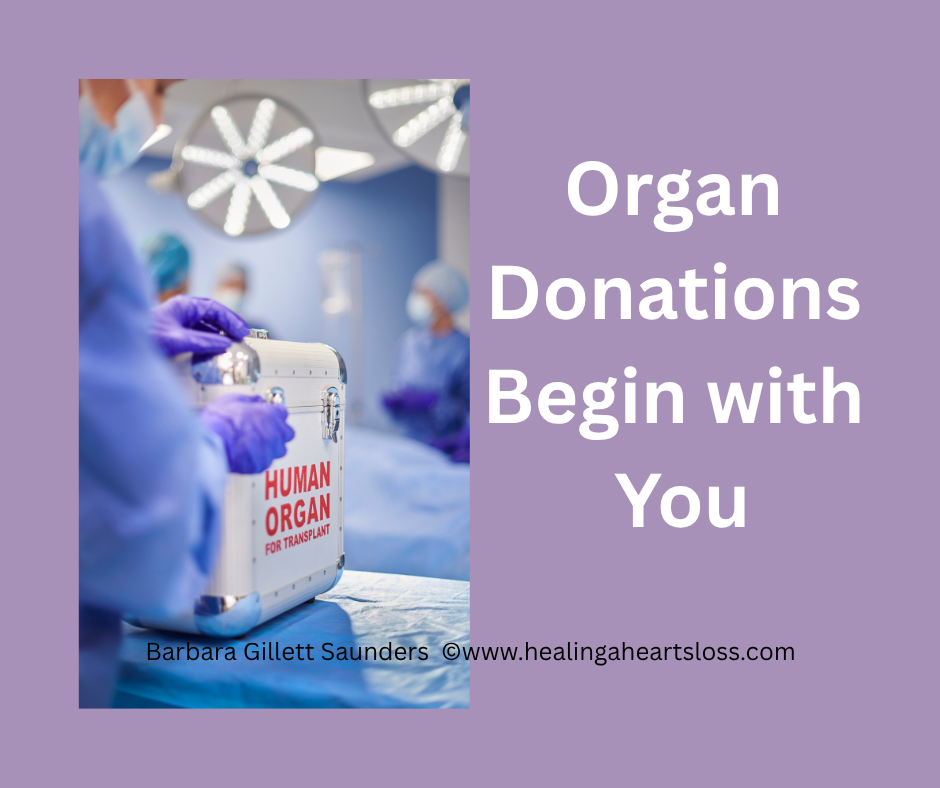
Organ donation begins with you making a decision whether to donate your organs after death or not. Having the conversation about your decision needs to be done with family, friends, doctor and whoever else you think should be aware of your choice.
Recently, when renewing my license this question came up in discussion. This can be done electronically now, but I remember years ago signing a paper with my license renewal and keeping it with me; in the event I had a fatal accident my wishes would be known.
Another time when this topic came up was at a (Cardiopulmonary Resuscitation) CPR / First Aid course where I was told “dead is dead”, keep the heart pumping, because the organs can be used. WOW!!! I had never looked at this way before.
Donating organs can be viewed as a great service to humanity, a selfless gift to help others after you die. On the other hand, donating body organs may infringe on religious beliefs, personal violation of the body and the furthest thing from what you ever thought you would do or want to do; each to their own opinion.
I have heard stories from individuals who have had deceased loved ones donate different body organs after a death. I have heard that more than 50 individuals can be helped from one person’s donation and lives can also be saved. Most donations are done after a death with internal organs such as; kidneys, heart, liver, pancreas, intestines and lungs being used. The skin, bone, bone marrow and corneas can also be used.
Perhaps you have read articles or know about people who have received heart, lung or other organ transplants. The fact that a loved one died brings with it grief and loss. The fact that another person’s loved one lives or has a chance for a better quality of life can bring with it hope and gratitude.
The deceased loved one is not returning, but a part of them lives on in another way. People who receive a donation know the reality of the situation and in some cases have sent letters of gratitude to the family of the donor.
Have you had the organ donor conversation?
A side note and part for a different conversation is organ donation associated with Medical Assistance in Dying (MAiD).
If you have not considered organ donation, take the time to do so now. Have the conversation and do what is best for all concerned. This may mean a “NO” to organ donation for you, but does your family know this?
All my best,
Barbara Gillett Saunders